The short answer
An event production company owns the technical side of your conference: planning and budgeting, vendor and equipment sourcing, show design, crew, show calling, stage management, and on-site execution. For a major finance conference, bring one in 6 to 12 months out (3 to 6 months for smaller events). Expect a discovery call, a proposal broken into labor, equipment, and creative, a site visit, a production schedule, a full rehearsal, and a post-event debrief. Before you hire, ask who will actually be on-site, whether there is a dedicated show caller, and how they handle the venue's in-house AV.
Most people hiring an event production company for the first time are doing it because the event has outgrown what their team can handle. More speakers, more stages, a livestream, a sponsor list that expects to see recognition done right. The problem is that "event production" means different things to different vendors, and it is hard to compare proposals when you are not sure what you should be getting.
This is what a real production partner does for a financial services conference, how the engagement works, and what to ask before you sign.
What an Event Production Company Actually Does
Three kinds of companies get lumped together, and they do very different jobs:
- Event planner or agency. Owns the attendee experience: venue selection, hotel blocks, registration, catering, programming, and sponsor relations.
- AV company. Owns equipment: screens, audio, lighting, cameras, and the technicians who operate them.
- Production company. Owns the show. That means turning the program into a technical plan, sourcing the right equipment and crew, designing how the stages look and flow, calling the show live, managing speakers backstage, and being accountable for how it all comes together in front of the audience and on camera.
On a finance conference, the production company is the layer between your event team and every technical vendor. You describe the event you want. The production company figures out what it takes, hires and directs the people and gear to do it, and runs it on the day.
At Choyce Creative, we are a production management and technical direction company, not an AV rental house. We source equipment through trusted local vendors in each market and manage those relationships on your behalf, which means our recommendations are about what your event needs, not what is sitting in our warehouse.
When to Bring One In
Earlier than most people think. For major conferences and multi-day events, we recommend reaching out 6 to 12 months in advance. For smaller events and corporate meetings, 3 to 6 months is typically ideal.
The reason is not that production takes a year of work. It is that the decisions that shape production get made early: which venue, which rooms, how many stages, whether you stream. A production partner who is in the room for those decisions can flag the ballroom with the low ceiling, the venue that charges five figures for internet, or the stage layout that will not work on camera, before you have signed anything.
That said, plans change. If you are in a bind, an experienced team can often step in with a few days' notice. You will have fewer options, but it is doable.
How the Engagement Works, Step by Step
1. Discovery
A call to understand the event: dates, venue, audience, program format, number of stages, speakers, streaming, sponsor commitments, and budget range. A good production company asks as many questions as it answers here. If the first call is mostly a pitch, that is a signal.
2. Proposal and Budget
A written scope and estimate. For a finance conference it should be broken out so you can see where the money goes (more on that below), and it should list assumptions: what is included, what the venue provides, and what is excluded.
3. Planning
This is where most of the work happens. Expect a site visit or detailed venue review, regular production calls, a master production schedule from load-in to strike, crew assignments, equipment lists, and vendor coordination. We run every event through Prepro, our production management tool, so the schedule, contacts, crew, equipment, and creative assets all live in one place the entire team works from.
4. Creative
Stage backgrounds, LED wall content, lower thirds, speaker cards, walk-in loops, sponsor graphics. This takes longer than anyone plans for, so build review rounds into the timeline.
5. Rehearsal and Show Day
A technical rehearsal on the actual equipment, then the show. On show day, a dedicated show caller runs the rundown in ShowCall, our run-of-show tool, and calls every cue while stage managers handle speakers backstage. Your team should be able to focus on attendees, speakers, and sponsors, not on whether the next video is cued.
6. Follow-Up
Footage backed up to two separate locations, a post-event debrief, documentation, and recommendations for next year.
Field note
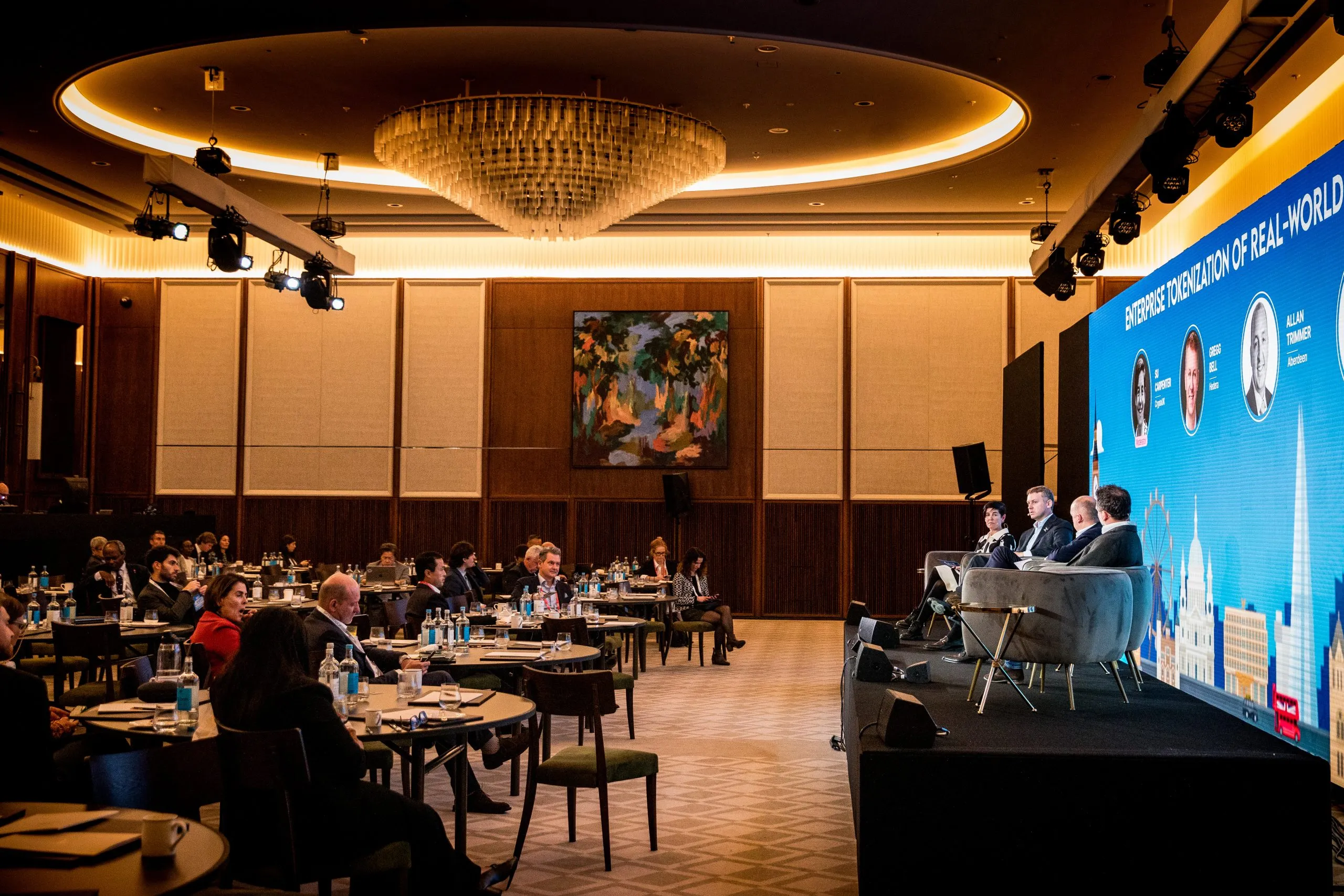
For SALT London, the venue was the newly opened Chancery Rosewood, a converted former US Embassy that had never hosted a conference at this level. We ran an overnight load-in with a four-person crew, learning the building's operations in real time. That only works when every vendor is working from the same schedule and the plan was locked long before load-in.
What Goes Into a Production Proposal
Line items vary, but a finance conference proposal generally breaks into five buckets:
- Labor. Producer or technical director, show caller, audio engineer (A1), video and playback operators, lighting, camera operators, stage managers, and a crew for load-in and strike. Labor is often the largest line, and it is the one where cutting corners shows up on stage.
- Equipment. LED walls or projection, audio, lighting, cameras, switching, playback, confidence monitors, and communications.
- Creative. Motion graphics, stage content, and branded show packages.
- Venue-related costs. Rigging, power, dedicated internet, and any fees the venue charges outside AV vendors.
- Travel and logistics. Crew travel, freight, and hotel.
One cost that surprises first-time buyers: many hotels and conference centers have an in-house AV provider and charge fees when you bring in an outside company, or require that certain services such as rigging and power go through them. Ask your venue about this before you sign the venue contract, and make sure your production company has accounted for it in the estimate.
For rough ranges on what finance events cost to produce, see the FAQ in our investor summit guide.
What You Will Be Asked to Provide
The production team can only plan around what it knows. The sooner you can share these, the better the plan:
- Venue contract, floor plans, and your venue contact
- A draft agenda, even a rough one, with session formats (keynote, panel, fireside chat)
- Speaker list as it develops, including anyone with a security detail
- Brand guidelines, logos, and sponsor deliverables
- Streaming or recording requirements, and who the remote audience is
- A decision-maker who can approve changes quickly during planning and on show day
Questions to Ask Before You Hire
- Have you produced finance events at this scale? Ask for case studies with a similar audience, speaker profile, and number of stages.
- Who will actually be on-site, and in what roles? The person selling the job should be able to name who is running your show.
- Is there a dedicated show caller? On anything with multiple speakers, graphics, and video, someone needs to be calling cues and doing nothing else.
- How do you handle the venue's in-house AV? You want a clear answer, not a surprise invoice.
- What is your redundancy plan? Spare microphones, backup playback, backup internet and encoding if you are streaming.
- How do you communicate with us on show day? There should be a direct line between your team and the production lead.
Red Flags
- A proposal that is one number with no breakdown.
- No questions about your audience, speakers, or program before quoting.
- Recommendations that happen to match exactly what the vendor owns.
- No rehearsal in the schedule.
- Nobody who can explain the plan for a speaker running late or a stream dropping.
The bottom line
The right production company makes your event feel effortless to everyone in the room and watching online, and makes your team's job easier in the months before it. Hire the team that asks the best questions, shows you who will be on-site, and can explain exactly what happens when something goes wrong.
Frequently Asked Questions
What does an event production company do for a financial services conference?
An event production company owns the technical side of the conference: turning the program into a technical plan, budgeting, sourcing equipment and crew, designing the stage and show flow, coordinating vendors, calling the show live, managing speakers backstage, and running on-site execution from load-in to strike.
What is the difference between an event planner and an event production company?
An event planner owns the attendee experience: venue, hotel, registration, catering, programming, and sponsors. An event production company owns the show itself: staging, audio, video, lighting, streaming, graphics, show calling, and stage management. On a finance conference, the two work side by side, and the production company directs the technical vendors.
How far in advance should we hire an event production company?
For major conferences and multi-day events, 6 to 12 months in advance. For smaller events and corporate meetings, 3 to 6 months is typically ideal. Bringing production in before the venue contract is signed helps avoid costly surprises. If you are in a bind, an experienced team can often step in with a few days' notice.
What is included in an event production proposal?
A finance conference proposal typically breaks into labor (technical director, show caller, audio, video, lighting, camera, and stage crew), equipment, creative (motion graphics and stage content), venue-related costs such as rigging, power, and internet, and travel and logistics. It should also list assumptions and exclusions.
Do we still need a production company if we hire an AV company?
For most finance conferences, yes. An AV company provides and operates equipment, but it typically does not own the whole show: planning across every vendor, show design, show calling, speaker management, and accountability for how it all comes together on stage and on camera. Some AV companies can supply a technical director or show caller, so ask exactly who will fill those roles. For a single-room meeting with a simple agenda, an AV company on its own may be enough.
What should we have ready before the first call with a production company?
Event dates, the venue or shortlist, expected attendance, a rough agenda with session formats, the number of stages or rooms, whether you plan to livestream or record, and a budget range. You do not need everything finalized; a good production company will help shape the rest.